



Choosing the best VST plugins for Trance in Cubase isn’t really about finding the “best” synth in some abstract sense. It’s about matching a tool to a specific job: a screaming Uplifting lead, a rolling Psytrance bassline, a pad that can hold a breakdown without turning to mud, or an arp that keeps moving without taking over the entire mix.
A synth that’s brilliant for one of those tasks can be the wrong choice for another. That’s why generic plugin roundups aren’t always very useful for Trance producers. They tend to rank synths by features or popularity rather than by how they actually behave in a Trance production.
This guide focuses on a relatively small selection of instruments and effects that earn their place in a Cubase project. More importantly, it looks at what each synth is particularly good at in Trance production, where its strengths are, and when another plugin may actually be a better choice.
The recommendations are based not only on specifications, but also on practical Trance production experience — particularly Uplifting Trance, Psytrance, and related electronic styles.
What Should You Look for in a Trance Plugin?
Before getting into specific plugins, it’s worth being clear about what actually matters when you’re choosing tools for Trance. A “good synth” and a “good synth for Trance” aren’t necessarily the same thing.
Sound character
Trance relies on a handful of very recognisable sounds: wide supersaws, bright plucks, emotional leads, rolling basses, atmospheric pads and rhythmic arpeggios.
A synth doesn’t necessarily need hundreds of oscillators or an enormous feature list to be useful. What matters is how quickly it can produce the sounds you actually need.
Modulation and movement
Trance is a genre built around movement. Filters open and close, leads evolve, basses roll, pads change throughout a breakdown, and arpeggios provide constant rhythmic motion.
A good modulation system can make this much easier because movement can be designed directly into the patch rather than recreated later with endless automation.
CPU efficiency
A typical Trance arrangement can contain a surprising number of synth layers: sub bass, mid bass, several lead layers, pads, plucks, arps and FX.
A synth that sounds fantastic on its own can become inconvenient when you have ten or more instances running in a large Cubase project.
This is one reason older, relatively simple instruments can still be extremely useful. They may not have the newest synthesis technology, but they can be remarkably efficient.
Workflow speed
There is also a practical difference between a synth that can technically produce a sound and one that gets you there quickly.
For Trance, this matters particularly with familiar sounds such as supersaws, plucks and basses. If a preset is already 90% of the way there, you can spend your time writing the melody and arrangement instead of rebuilding the sound from scratch.
Does the plugin solve a real problem?
This is probably the most important question.
A plugin can be technically impressive without being something you actually need. If Cubase already handles a particular task well, buying another plugin just because it appears in every “Top 10 VSTs” article isn’t necessarily a good investment.
The best plugin collection is usually not the largest one. It’s the one where every instrument has a reason for being there.Best Synth Plugins for Trance
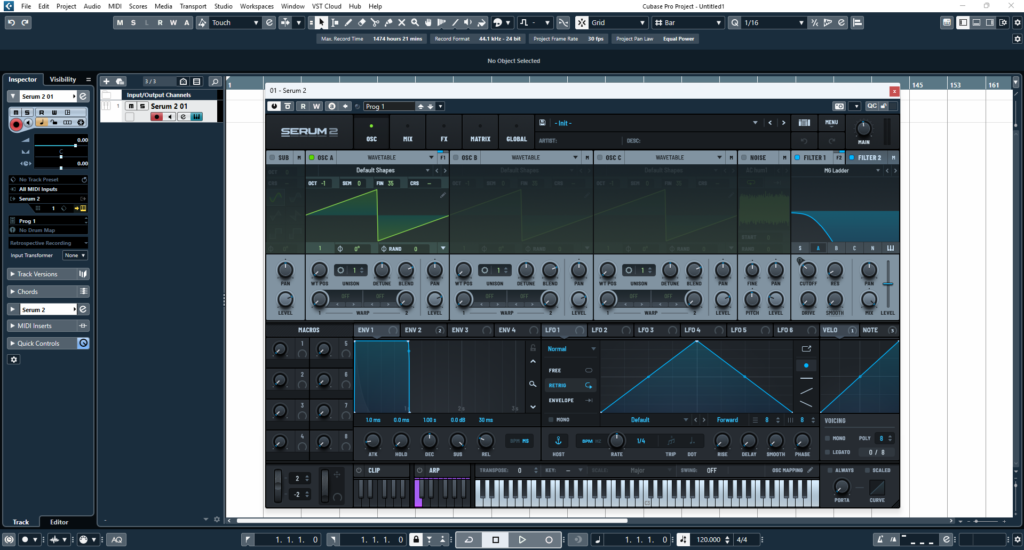
Xfer Records Serum 2 — best for flexible, modern sound design
Serum 2 is one of the most flexible synths in this list. Its wavetable engine has been expanded with multisample, sample, granular and spectral synthesis capabilities, giving it a much broader sound-design range than the original Serum.
For Trance production, Serum 2 is particularly useful when you don’t simply want another conventional supersaw or preset-based lead. Its modulation capabilities make it possible to create evolving plucks, unusual leads, atmospheric textures and highly controlled bass sounds.
This becomes especially interesting in Psytrance, where the sound often needs to be more aggressive, detailed and unusual than a traditional Uplifting Trance patch.
The trade-off is that Serum 2 gives you an enormous amount of control, which can also mean spending more time programming sounds. That’s not necessarily a disadvantage — it simply makes it more suitable for producers who actually want to explore sound design rather than only browse presets.
Best for: original sound design, evolving leads and plucks, modern bass sounds and Psytrance.
Limitation: its depth can mean a longer sound-design process, and it can be more demanding on the CPU than simpler Trance staples.

interested in seeing these Psytrance techniques applied in a complete Cubase project?
Explore our Psytrance Cubase Templates →Reveal Sound Spire — best for Uplifting Trance leads, supersaws and arps
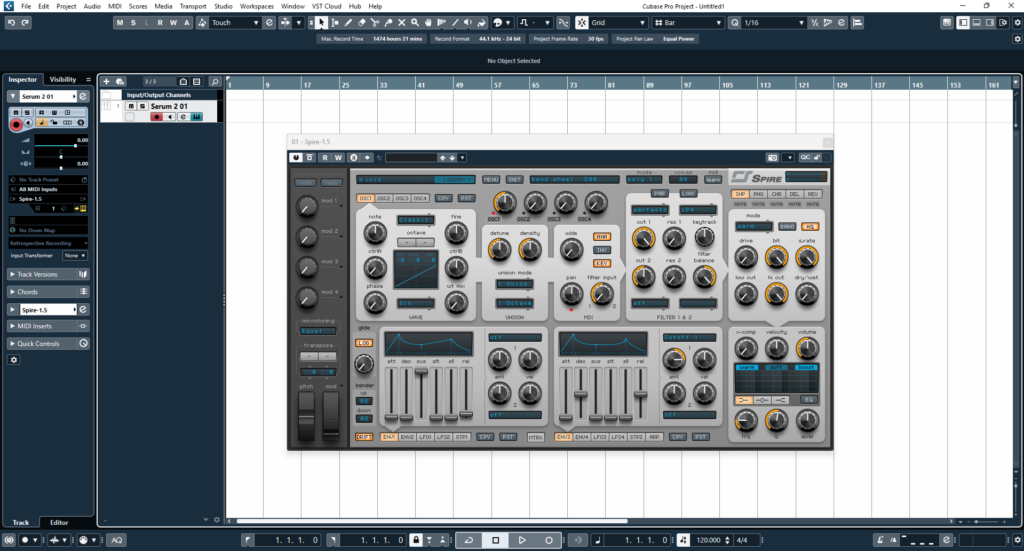
Spire has a particularly strong connection with Trance because it gets to the characteristic sound of the genre extremely quickly.
Its four oscillators and powerful unison engine are particularly well suited to wide supersaws, bright leads, pads and plucks. For Uplifting Trance, this is a major advantage: you can often start with a good preset and already be very close to the sound you’re looking for.
But for me, Spire’s strength goes beyond supersaws.
Its arpeggiator is one of the reasons I continue to find it so useful in Trance production. The sound of a Spire arp can sit naturally inside a Trance arrangement without requiring a huge amount of processing or sound design.
“For Uplifting Trance leads and supersaws, Spire is still my first choice.”
Spire is also very useful for pads and mid-bass sounds. That makes it more versatile in a Trance project than its reputation as simply a “supersaw synth” might suggest.
Best for: Uplifting Trance leads, supersaws, arpeggios, pads and mid-bass.
Limitation: it is more focused on its established sound than a modern wavetable synth such as Serum 2, so it isn’t the first choice when you want extremely experimental sound design.

For Uplifting Trance leads and supersaws used in a complete production, take a look at our Cubase templates
Explore our Trance Cubase Templates →LennarDigital Sylenth1 — best for Trance sub bass and efficient layering
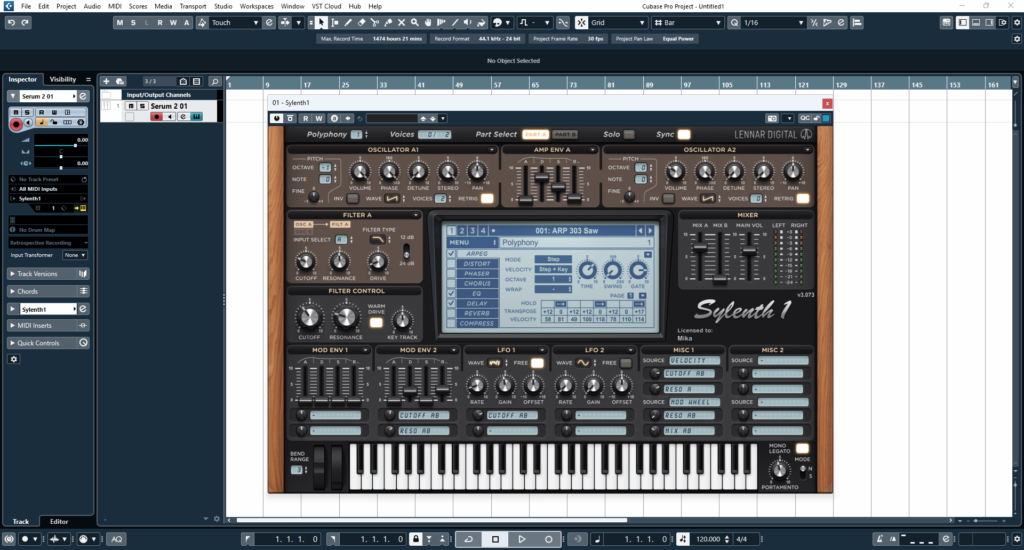
Sylenth1 has been a Trance staple for many years, and there is a practical reason it has remained relevant.
It is relatively simple compared with newer instruments, but that simplicity is part of its strength. It loads quickly, is easy to program and is efficient enough to use across dense arrangements.
For Trance, one area where I particularly rely on Sylenth1 is the sub bass.
“For Trance sub bass, Sylenth1 is still my go-to synth.”
A sub doesn’t need an elaborate synthesis engine. What matters is a clean, predictable low-frequency sound that sits underneath the rest of the bass and kick without creating unnecessary problems.
Sylenth1 is also useful for pads and can handle plucks, leads and arps. Its CPU efficiency becomes particularly valuable when several layers are playing simultaneously.
Where it is less flexible than Serum 2 is sound design. Sylenth1 doesn’t have Serum’s wavetable, granular or spectral capabilities. But if the job is creating a clean Trance bass or layering several familiar Trance sounds, that limitation often doesn’t matter.
Best for: sub bass, pads, plucks, arps and efficient multi-layered Trance arrangements.
Limitation: much less experimental sound-design capability than modern wavetable and hybrid synths.Sylenth1 is still my go-to synth for Trance sub bass. The important part is how the bass works together with the kick, midbass and arrangement.
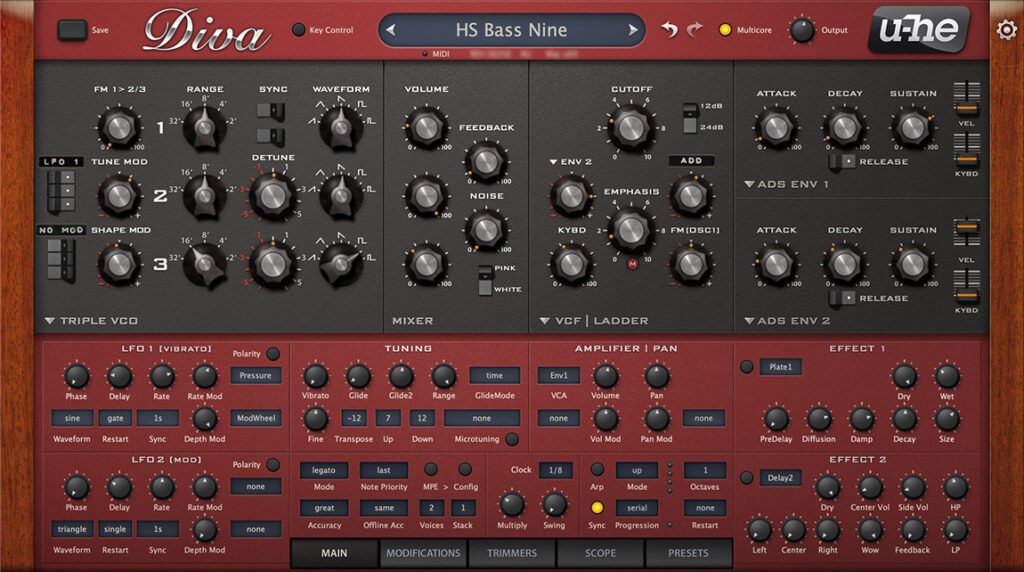
u-he Diva — best for analog-style character
Diva takes a different approach from Serum 2 and Vital. Instead of concentrating on modern wavetable synthesis, it models different types of analogue oscillator, filter and envelope behaviour and allows them to be combined into different architectures.
The result is particularly useful when you want a bass, pad or other sound with a more organic analogue character.
Diva can be an excellent choice for Progressive Trance and for producers who specifically want analogue-style movement and warmth.
However, there is an important practical consideration: CPU usage.
Diva can be considerably more demanding than a lightweight synth such as Sylenth1. In a project containing many simultaneous synth layers, that can make a significant difference.
For that reason, Diva is best viewed as a specific sonic tool, rather than something that necessarily needs to be behind every synth layer in your project.
Best for: analogue-style basses, pads and sounds where character is more important than CPU efficiency.
Limitation: relatively high CPU usage compared with simpler Trance synths.

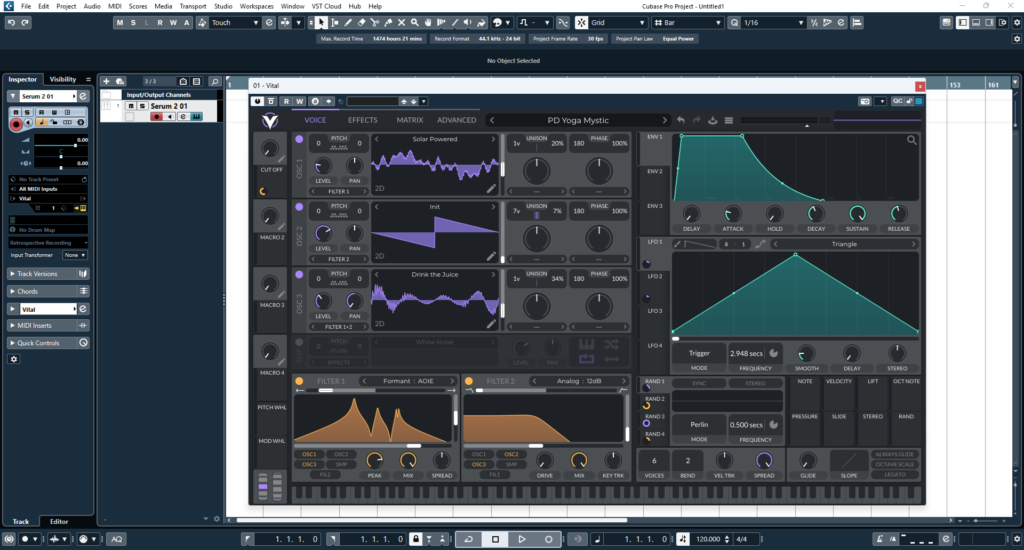
Vital — best free wavetable synth
Vital is one of the most interesting choices for producers who want a modern wavetable synth without spending money.
Its free Basic tier includes the actual synthesis engine rather than functioning as a heavily restricted demo. The paid versions primarily add additional presets and content rather than locking the fundamental synthesis capabilities behind a paywall.
That makes Vital particularly useful for beginners.
Its visual modulation system is also well suited to Trance because it makes it easy to see how envelopes and modulation sources are changing a sound over time.
For someone starting a new Trance setup, Vital can cover a surprisingly large amount of ground: leads, plucks, basses, pads and FX.
Best for: beginners, modern wavetable sounds and producers looking for a genuinely capable free synth.
Limitation: the free version has less factory content than the paid versions.

Spire vs Sylenth1 vs Serum 2 vs Vital vs Diva
The easiest way to understand these synths is not to ask which one is “the best”. They solve different problems.
| Synth | My main use / strength | Particularly useful for |
|---|---|---|
| Spire | Leads, supersaws, arps, pads, mid-bass | Uplifting Trance |
| Sylenth1 | Sub bass, pads and efficient layering | Classic and modern Trance |
| Serum 2 | Sound design, basses and evolving sounds | Psytrance, Progressive, modern Trance |
| Vital | Modern wavetable synthesis | All styles, especially on a budget |
| Diva | Analogue-style character | Progressive Trance and analogue-inspired sounds |
If I had to reduce that even further:
For fast Uplifting lead or supersaw i would go with: Spire
For clean Trance sub bass i would use Sylenth1
For psytrance bass and deeper sound design i would open Serum 2
For low budget production with free modern synth i would go Vital
That is a much more useful distinction than simply ranking the five from first to fifth.Best Plugins for Trance Bass
Trance bass is less about owning a particular plugin and more about knowing how to build the bass around the kick and the rest of the arrangement.
Sub and mid-bass separation
A common approach is to keep the sub relatively simple and let a separate mid-bass layer provide the harmonic character and rhythmic movement.
This is one of the reasons Sylenth1 works so well for Trance sub bass. The sub doesn’t need to be complicated.
The mid-bass can then be created separately in a synth such as Spire, Sylenth1 or Serum 2.
Keeping the low-frequency sub layer simple also makes it easier to control mono compatibility and phase relationships.
Rolling and offbeat bass
The familiar rolling bass patterns found throughout Trance and Psytrance are primarily a result of rhythm, envelopes and filter movement.
A short amplitude envelope combined with filter modulation can turn a relatively simple oscillator into a highly rhythmic bass sound.
This is not something exclusive to one synth. The important part is understanding how the envelope, filter and note pattern interact.
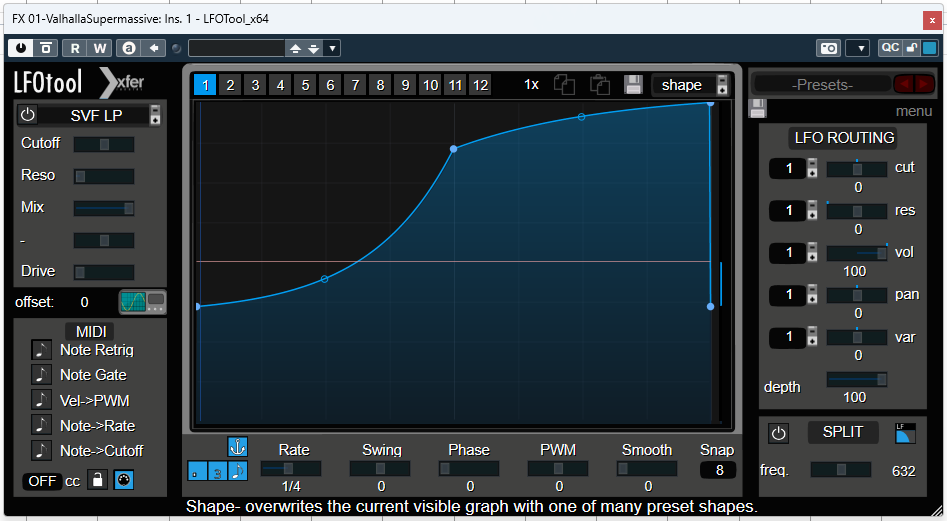
LFO tool or another sidechain plugin is a must have for any trance producer. Using a sidechain plugin saves you from making complicated sidechain routing inside Cubase. You simply activate a plugin, sync it to your project BPM, and you are ready to go pump those trance tracks with rythmic movement.“LFO Tool, or another sidechain plugin is a must have for any trance producer.”
Kick and bass separation
Sidechain compression or volume ducking is commonly used to make room for the kick. This is where a sidechain plugin like LFO tool comes to picture again.
Cubase’s own compressor is perfectly capable of handling this job also if you prefer using only Cubase. You don’t need a specialist sidechain plugin simply to create basic kick-and-bass separation.
The more important part is choosing the amount and timing of the ducking so that the bass moves with the groove rather than simply disappearing every time the kick hits.
Saturation and distortion
Saturation can add harmonics to a bass, making it easier to hear on smaller speakers and headphones.
This can be particularly useful when a sub-heavy bass sounds powerful on large monitors but almost disappears on a laptop or phone.
A stock distortion plugin can certainly do the job. Dedicated saturation plugins become useful when you want a specific type of harmonic character or faster control over the result.
Want to see these techniques in a complete Cubase project?
Instead of studying individual synths in isolation, you can explore complete Trance productions with the instruments, bass, drums, effects and arrangement already working together.
Explore our Trance Cubase Templates →Best Plugins for Trance Effects
Synthesizers get most of the attention in plugin discussions, but effects are just as important in a Trance production.
EQ
Cubase’s stock EQ is already capable of handling the majority of normal Trance mixing tasks.
The main advantage of a third-party EQ is usually workflow, additional visual feedback or a particular processing character — not that Cubase’s EQ is somehow incapable of producing a professional result.
Compression
Compression can be used for individual sounds, buses and sidechain ducking.
With layered Trance leads, light bus compression can help several synth layers feel more like one instrument rather than separate sounds fighting for attention.
Reverb
Reverb is fundamental to the spacious character of Trance, especially in breakdowns.
However, long reverbs can quickly become problematic once the kick and bass return. A lead that sounds enormous on its own can easily turn into an indistinct wash when the full arrangement is playing.
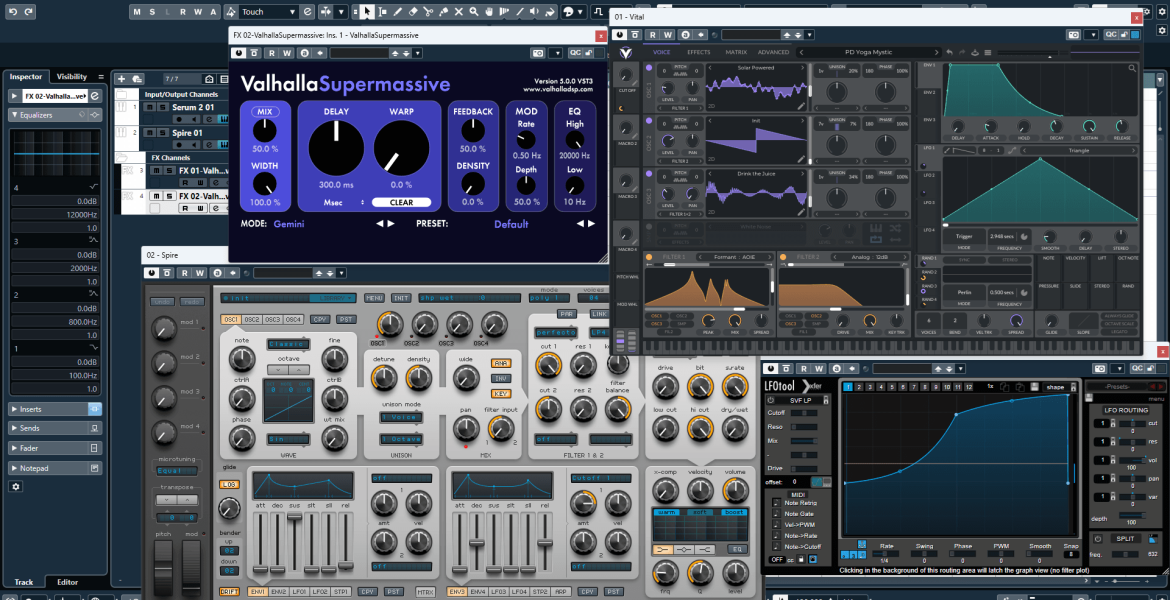
Valhalla Supermassive is one of the best free options for this kind of work. It can produce everything from spacious delays to huge, modulated reverb textures.
For more traditional reverb sounds, Valhalla’s paid reverbs such as VintageVerb and Plate offer more conventional room, hall and plate-style character.
Delay
Tempo-synchronised delay is particularly useful on plucks and short lead phrases.
Instead of adding another melodic layer, a delay can create rhythmic movement around an existing melody. Dotted-eighth and triplet settings are useful starting points for many Trance arrangements.
Stereo imaging
Wide stereo processing works particularly well on pads, leads and supersaw layers.
The important exception is the low end. Keeping the sub and most of the fundamental kick information appropriately centred helps maintain a stable low-frequency image and good mono compatibility.
Limiting
A limiter is useful for controlling peaks while mixing and previewing a track.
However, final loudness is a mastering decision, not something that should determine which synth or effect plugins you buy.
Best Plugins for Uplifting Trance
Uplifting Trance is where the strengths of Spire become particularly obvious.
The genre relies heavily on emotional leads, wide supersaws, bright plucks, arps and large atmospheric pads.
For those sounds, my first choice is Spire.
“If I had to choose one synth for Uplifting Trance leads and supersaws, it would be Spire.”
The reason isn’t that Spire has the most advanced synthesis engine. It is that it gets to the sound I want very quickly and consistently.
It is also particularly strong for Trance arpeggios and pads, which means a single Spire instance can contribute several important parts of an arrangement.
Sylenth1 complements it well. I particularly like Sylenth1 for sub bass and pads, and its low CPU usage makes it useful when an arrangement contains many simultaneous layers.
Serum 2 has a different role. Rather than replacing Spire for traditional Uplifting sounds, it is useful when you want to create something more individual — an evolving lead, unusual pluck or more complex texture.
The important point is that you don’t necessarily need five synths playing the same role.
A combination such as Spire for the main lead, Sylenth1 for supporting layers and sub bass, and Serum 2 for selected sound-design elements can already cover a very large part of a Uplifting Trance production.
And the sound of the synth is only one part of the result. Layering remains extremely important. Two or three complementary lead layers can often produce a larger and more controlled sound than trying to make one patch do everything.
Best Plugins for Psytrance
Psytrance doesn’t necessarily require a completely different collection of synthesizers.
The same instruments can be used, but the way they are programmed is different.
For Psytrance, Serum 2 is the synth I would reach for first, particularly for bass and more detailed sound design.
“For Psytrance bass, Serum gives me the sound and flexibility I want.”
Serum’s modulation possibilities make it particularly useful when the bass needs more than a simple repeating analogue-style pattern.
Rolling Psytrance bass
A Psytrance rolling bass is primarily about envelope timing, filter movement and the relationship between kick and bass.
The oscillator itself can be relatively simple.
A short envelope, carefully controlled filter cutoff and rhythmic note pattern can create the characteristic movement. The important part is getting the timing right.
Acid-style modulation
Resonance and cutoff modulation can create the squelchy movement associated with acid-influenced Psytrance.
This is another example where the technique is more important than the plugin.
A capable modulation system simply gives you more control over how the sound evolves.
Psytrance leads
Psytrance leads often benefit from brighter oscillator material, distortion, waveshaping and aggressive filter movement.
This is where Serum 2 becomes particularly interesting because its wavetable and spectral capabilities allow you to move well beyond traditional analogue-style waveforms.
Spire and Sylenth1 can still be excellent for punchier, more conventional sounds, but Serum 2 gives you more room to create something unusual.
Arps and sequenced sounds
Psytrance often uses fast and rhythmically complex sequences.
Spire is particularly useful here from a Trance production perspective, while Serum 2 offers extensive modulation possibilities and a modern sequencing workflow.
There are also specialist instruments aimed specifically at very narrow Psytrance subgenres such as hitech and darkpsy.
These can be interesting for producers working deeply within those styles, but I don’t consider them essential. A strong understanding of Serum 2, Spire or Sylenth1 will take you much further than simply buying another specialist bass synth.
Best Free VST Plugins for Trance
Free doesn’t have to mean compromised.
Vital
Vital is probably the strongest free synth recommendation in this guide because the free version contains the actual synthesis engine rather than an artificially restricted demo.
It is capable of leads, basses, pads and plucks and can be used as a serious production instrument.
Cubase stock instruments
Cubase itself also provides a useful collection of instruments, although the exact instrument lineup depends on the Cubase edition.
Retrologue and Padshop are particularly relevant for Trance producers who want additional subtractive and granular sound-design options without immediately purchasing another third-party synth.
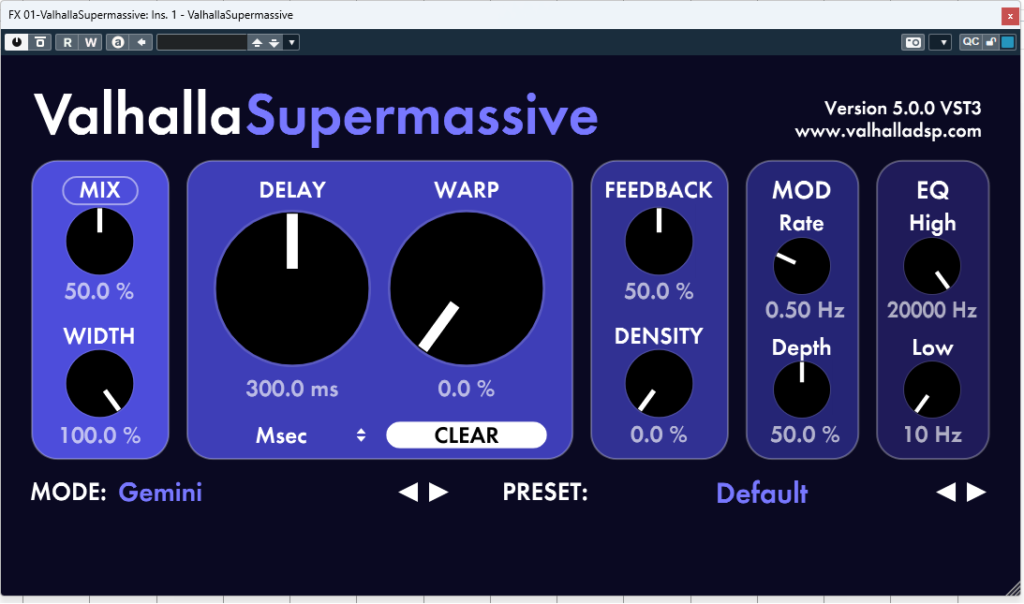
Valhalla Supermassive
Supermassive is another genuinely useful free plugin.
It is particularly well suited to huge reverbs, delays and atmospheric effects, making it a natural fit for Trance breakdowns and transitions.
A free setup built around Vital + Cubase’s included instruments + Supermassive can take a beginner surprisingly far.
You don’t need to spend hundreds of dollars on plugins before learning how to finish a track.
If you want to go beyond individual plugins and study complete Trance productions inside Cubase, explore the templates at Cubase Templates store.

Cubase Stock Plugins vs Third-Party Plugins
Cubase’s stock plugins are considerably more capable than some plugin roundups make them sound.
Depending on the Cubase edition, instruments such as Retrologue, Padshop, HALion Sonic SE and Groove Agent SE can cover a wide range of production tasks.
Retrologue is useful for subtractive synthesis, basses, plucks and simpler leads.
Padshop is particularly interesting for atmospheric and evolving textures because of its granular approach.
HALion Sonic SE and Groove Agent SE can provide additional sample-based instruments, drums and supporting sounds.
So why buy third-party synths?
For me, the answer is not that Cubase’s instruments are bad. It’s that dedicated Trance synths can provide a workflow and sound palette that I already know works for the genre.
I personally don’t build my Trance productions around Cubase’s stock synthesizers. I tend to rely on external synths that I already know well and trust for specific Trance sounds.
That is an important distinction.
“I don’t buy a synth because Cubase can’t make the sound. I use dedicated Trance synths because I already know how quickly they get me where I want to go.”
There is also the question of CPU efficiency.
Sylenth1, for example, may not have the feature list of a modern hybrid synth, but its efficiency becomes valuable when you are running many layers.
The same principle applies to workflow. If you can create a familiar Trance sound in seconds with a synth you know extremely well, that has real production value.
How Many Plugins Do You Actually Need?
Not nearly as many as plugin marketing suggests.
A realistic Trance toolkit can be surprisingly small:
- One main lead/pluck synth
- One efficient bass synth
- One modern sound-design synth
- A pad option
- EQ
- Compression
- Reverb
- Delay
- A few utility and saturation tools
You don’t need ten different synthesizers capable of producing a supersaw.
In fact, learning one synth deeply is often more useful than owning twenty synths you barely know.
You learn how its filters behave, how its envelopes feel, how its unison sounds, how much processing a patch normally needs and how quickly you can get from an empty preset to a finished sound.
That knowledge becomes part of your production workflow.
Buying another plugin makes sense when it solves a specific problem.
If you already have a synth that produces excellent Uplifting leads, buying another Uplifting lead synth may not improve your music at all.
Recommended Plugin Setup for Different Trance Producers
Beginner Trance Producer
Start with Vital, Cubase’s stock instruments and Cubase’s built-in effects.
You can make a complete Trance track without spending hundreds of euros on plugins.
Once you’ve finished several tracks, you’ll have a much better idea of what your current setup is actually missing.
Uplifting Trance Producer
For Uplifting Trance, I’d start with:
Spire — leads, supersaws, arps, pads and mid-bass.
Sylenth1 — sub bass, pads and additional layers.
Serum 2 — selected sound-design tasks and more unusual leads/plucks.
For reverb, Supermassive is an excellent free starting point, while dedicated Valhalla reverbs can provide more traditional reverb character.
Psytrance Producer
For Psytrance:
Serum 2 — basses, evolving sounds and detailed sound design.
Spire — leads, arps and additional Trance-oriented sounds.
Sylenth1 — efficient bass and synth layers where its simpler architecture is an advantage.
The important part isn’t owning all three. It’s knowing why you’re using each one.
Advanced Trance Producer
An experienced producer can use the full selection selectively.
Serum 2 can handle complex sound design.
Spire can provide fast, reliable Trance leads, arps and pads.
Sylenth1 can handle efficient bass and additional layers.
Diva can be brought in when its analogue-style character is specifically useful.
Vital remains useful even when you own expensive synths simply because its synthesis engine is capable of producing sounds that don’t depend on its price tag.
Quick Reference
| Plugin | Best Use | Best Fit | Price Category | Why Consider It |
|---|---|---|---|---|
| Spire | Leads, supersaws, arps, pads, mid-bass | Uplifting Trance | Paid | Extremely fast route to convincing Trance sounds |
| Sylenth1 | Sub bass, pads, plucks and layers | Trance | Paid | Excellent CPU efficiency and proven Trance workflow |
| Serum 2 | Sound design, basses, evolving leads | Psytrance, Progressive, modern Trance | Premium | Extremely flexible modern synthesis |
| Diva | Analogue-style basses and pads | Progressive Trance | Premium | Detailed analogue-style character |
| Vital | Wavetable synthesis | All styles | Free / paid content tiers | Full synthesis engine available in free version |
| Cubase instruments | Basses, pads, textures and supporting sounds | All styles | Included depending on edition | No additional purchase required |
| Valhalla Supermassive | Reverb, delay and atmosphere | All styles | Free | Excellent spacious effects without the cost |
Ready to Build Your Next Trance Track?
Take what you've learned from this guide and explore complete Cubase projects built for Trance production. Study the sounds, bass, drums, effects and arrangement — and use the projects as a starting point for your own music.
Explore Trance Cubase Templates →